
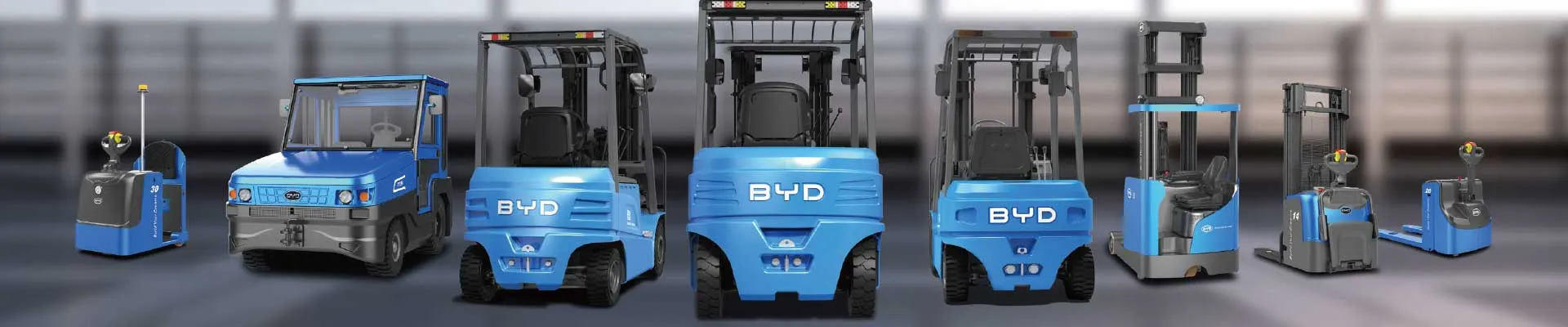
carretillas elevadoras eléctricas para centros logísticos y almacenes en España

2026-09-12
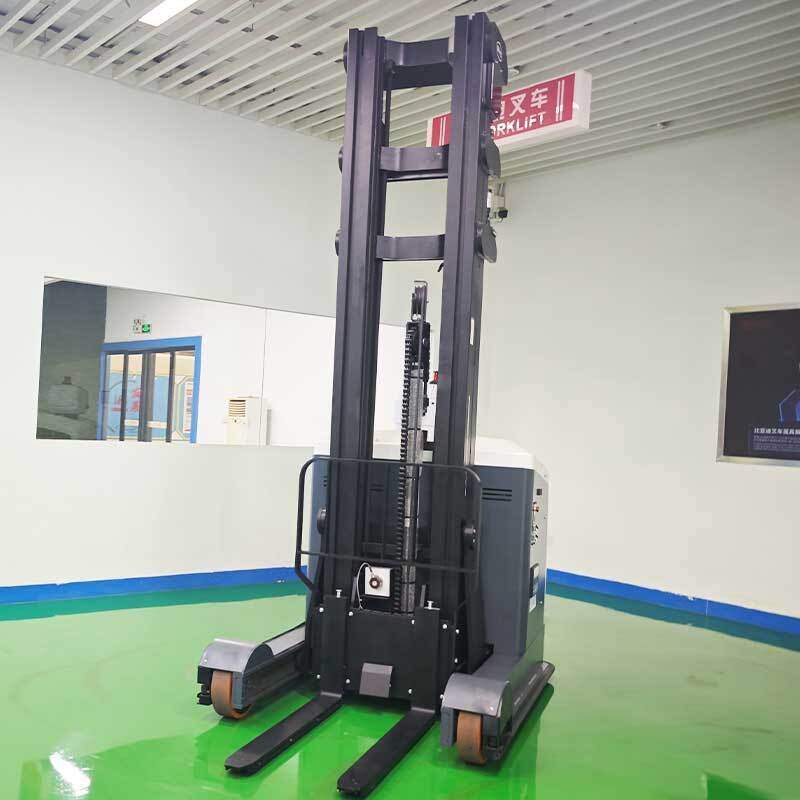
En el dinámico sector logístico español, la eficiencia y la sostenibilidad son clave. Las carretillas elevadoras eléctricas se han convertido en la opción preferida para almacenes y centros de distribución. Este artículo le guiará paso a paso para implementar con éxito carretillas eléctricas BYD con batería de litio en su instalación.

carretillas elevadoras eléctricas para centros logísticos y almacenes en España(Figura1)

Paso 1: Evaluar las necesidades de manipulación de su almacén

Antes de adquirir cualquier carretilla, realice un análisis exhaustivo de sus operaciones. Considere:

  • Tipo de carga: peso, dimensiones y estabilidad.
  • Altura de elevación: determine la altura máxima de apilado.
  • Anchura de pasillos: pasillos estrechos requieren carretillas retráctiles o transpaletas.
  • Volumen de trabajo: turnos, horas de operación y picos de actividad.
  • Condiciones del suelo: superficies irregulares o rampas.

Consejo: Utilice un software de simulación para optimizar los flujos logísticos.

Advertencia: No subestime la altura de elevación; una carretilla inadecuada puede ralentizar sus operaciones.
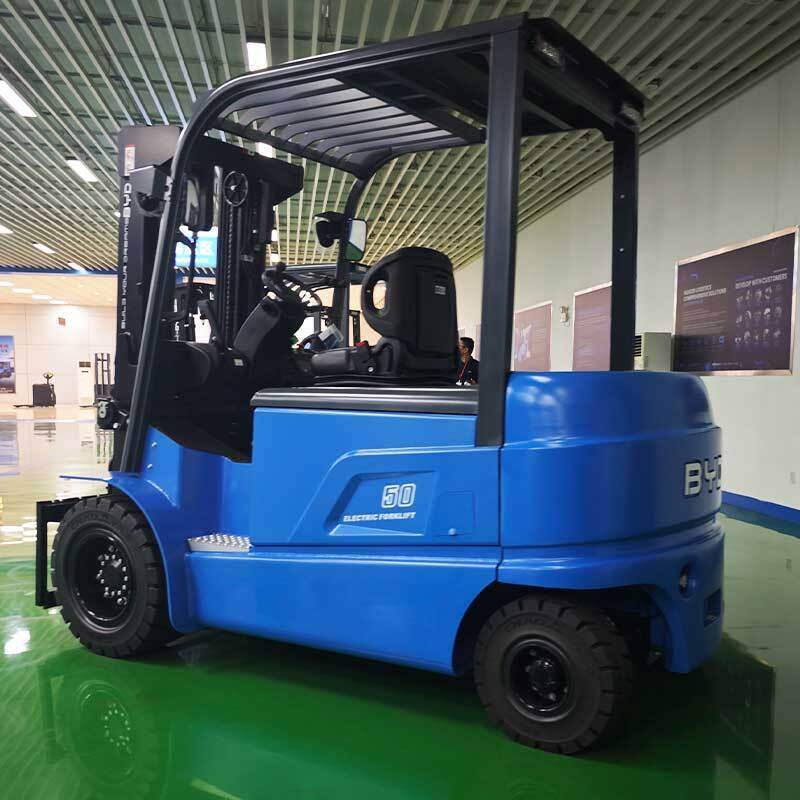
carretillas elevadoras eléctricas para centros logísticos y almacenes en España(Figura2)

Paso 2: Conocer las ventajas de las carretillas eléctricas con batería de litio

Las carretillas BYD con batería de litio hierro fosfato ofrecen múltiples beneficios frente a las de plomo-ácido:

CaracterísticaBYD LitioPlomo-Ácido
Duración de bateríaHasta 10 años3-5 años
Tiempo de carga1-2 horas (carga rápida)8 horas
MantenimientoNuloReposición de agua, limpieza
Eficiencia energéticaAltaMedia
Impacto ambientalBajo, sin emisionesGases durante carga

Consejo: Aproveche la oportunidad de carga durante las pausas para maximizar la disponibilidad.

Advertencia: Aunque las baterías de litio son seguras, asegure una ventilación adecuada y siga las instrucciones del fabricante.
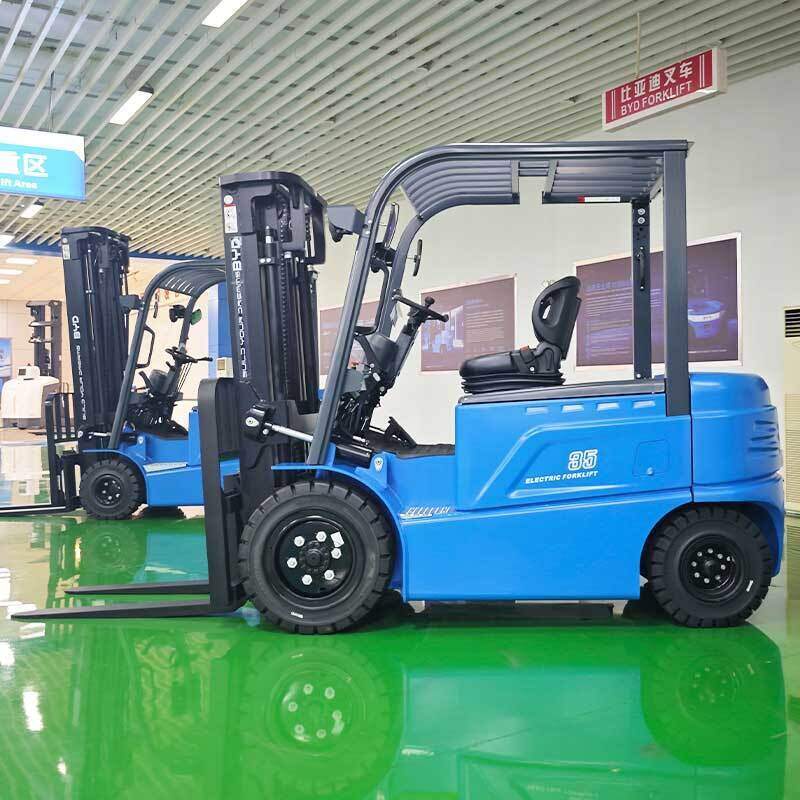
carretillas elevadoras eléctricas para centros logísticos y almacenes en España(Figura3)

Paso 3: Seleccionar el modelo adecuado de carretilla BYD

BYD ofrece una gama completa de carretillas eléctricas para diferentes aplicaciones:

ModeloCapacidad (kg)Aplicación
Contrapesada1.500 - 3.500Exteriores e interiores, carga pesada
Retráctil1.000 - 2.500Pasillos estrechos, gran altura
Transpaleta eléctrica1.500 - 2.000Descarga de camiones, almacenes
Apilador1.000 - 1.600Apilado en estanterías

Consejo: Considere la ergonomía y el confort del operario para reducir la fatiga.

Advertencia: Verifique que el modelo elegido sea compatible con su infraestructura (pasillos, estanterías, muelles).

Paso 4: Calcular el retorno de la inversión (ROI) y los costes operativos

Realice un análisis financiero detallado. Los costes a considerar incluyen:

  • Precio de adquisición o alquiler.
  • Costes de energía (electricidad vs. diésel/gas).
  • Mantenimiento y repuestos.
  • Formación de operarios.
  • Seguros e impuestos.

Las carretillas eléctricas BYD suelen tener un ROI de 1-2 años gracias al ahorro en combustible y mantenimiento. Utilice la fórmula: ROI = (Beneficios netos anuales / Inversión inicial) x 100.

Consejo: Incluya incentivos gubernamentales para vehículos eléctricos y eficiencia energética.

Advertencia: No ignore los costes de instalación eléctrica si no dispone de infraestructura adecuada.

Paso 5: Planificar la infraestructura de carga y la ubicación

La ubicación de los puntos de carga es crucial. Considere:

  • Carga oportunista: cargadores en zonas de descanso o muelles.
  • Carga nocturna: estaciones centralizadas.
  • Distancia a cuadros eléctricos.
  • Ventilación y temperatura.

Consejo: Instale cargadores de carga rápida BYD para reducir tiempos de inactividad.

Advertencia: Consulte con un electricista certificado para evitar sobrecargas y cumplir normativas.

Paso 6: Formar a los operarios y garantizar la seguridad

La formación es esencial para prevenir accidentes y maximizar la eficiencia. Incluya:

  • Manejo seguro de carretillas eléctricas.
  • Procedimientos de carga y cambio de batería (si aplica).
  • Inspección diaria antes de usar.
  • Normativa de seguridad (RD 1215/1997, etc.).

Consejo: Realice simulacros periódicos y fomente una cultura de seguridad.

Advertencia: Los accidentes más comunes son atropellos y caída de cargas; señalice las zonas de tránsito.

Paso 7: Establecer un plan de mantenimiento y soporte técnico

Un mantenimiento adecuado prolonga la vida útil. Planifique:

  • Revisiones periódicas (cada 500 horas).
  • Actualizaciones de software y diagnóstico remoto.
  • Stock de repuestos críticos.
  • Contrato de mantenimiento con el distribuidor BYD.

Consejo: Aproveche la telemetría para monitorear el estado de la carretilla y predecir fallos.

Advertencia: No ignore las alertas del sistema; una batería de litio en mal estado puede reducir el rendimiento.

Conclusión

La adopción de carretillas elevadoras eléctricas BYD en centros logísticos y almacenes en España es una decisión estratégica que mejora la eficiencia, reduce costes y contribuye a la sostenibilidad. Siguiendo estos pasos, podrá implementar con éxito esta tecnología y obtener una ventaja competitiva. Para asesoramiento personalizado, contacte con nosotros.

We use cookie to improve your online experience. By continuing to browse this website, you agree to our use of cookie.

Cookies

Please read our Terms and Conditions and this Policy before accessing or using our Services. If you cannot agree with this Policy or the Terms and Conditions, please do not access or use our Services. If you are located in a jurisdiction outside the European Economic Area, by using our Services, you accept the Terms and Conditions and accept our privacy practices described in this Policy.
We may modify this Policy at any time, without prior notice, and changes may apply to any Personal Information we already hold about you, as well as any new Personal Information collected after the Policy is modified. If we make changes, we will notify you by revising the date at the top of this Policy. We will provide you with advanced notice if we make any material changes to how we collect, use or disclose your Personal Information that impact your rights under this Policy. If you are located in a jurisdiction other than the European Economic Area, the United Kingdom or Switzerland (collectively “European Countries”), your continued access or use of our Services after receiving the notice of changes, constitutes your acknowledgement that you accept the updated Policy. In addition, we may provide you with real time disclosures or additional information about the Personal Information handling practices of specific parts of our Services. Such notices may supplement this Policy or provide you with additional choices about how we process your Personal Information.


Cookies

Cookies are small text files stored on your device when you access most Websites on the internet or open certain emails. Among other things, Cookies allow a Website to recognize your device and remember if you've been to the Website before. Examples of information collected by Cookies include your browser type and the address of the Website from which you arrived at our Website as well as IP address and clickstream behavior (that is the pages you view and the links you click).We use the term cookie to refer to Cookies and technologies that perform a similar function to Cookies (e.g., tags, pixels, web beacons, etc.). Cookies can be read by the originating Website on each subsequent visit and by any other Website that recognizes the cookie. The Website uses Cookies in order to make the Website easier to use, to support a better user experience, including the provision of information and functionality to you, as well as to provide us with information about how the Website is used so that we can make sure it is as up to date, relevant, and error free as we can. Cookies on the Website We use Cookies to personalize your experience when you visit the Site, uniquely identify your computer for security purposes, and enable us and our third-party service providers to serve ads on our behalf across the internet.

We classify Cookies in the following categories:
 ●  Strictly Necessary Cookies
 ●  Performance Cookies
 ●  Functional Cookies
 ●  Targeting Cookies


Cookie List
A cookie is a small piece of data (text file) that a website – when visited by a user – asks your browser to store on your device in order to remember information about you, such as your language preference or login information. Those cookies are set by us and called first-party cookies. We also use third-party cookies – which are cookies from a domain different than the domain of the website you are visiting – for our advertising and marketing efforts. More specifically, we use cookies and other tracking technologies for the following purposes:

Strictly Necessary Cookies
These cookies are necessary for the website to function and cannot be switched off in our systems. They are usually only set in response to actions made by you which amount to a request for services, such as setting your privacy preferences, logging in or filling in forms. You can set your browser to block or alert you about these cookies, but some parts of the site will not then work. These cookies do not store any personally identifiable information.

Functional Cookies
These cookies enable the website to provide enhanced functionality and personalisation. They may be set by us or by third party providers whose services we have added to our pages. If you do not allow these cookies then some or all of these services may not function properly.

Performance Cookies
These cookies allow us to count visits and traffic sources so we can measure and improve the performance of our site. They help us to know which pages are the most and least popular and see how visitors move around the site. All information these cookies collect is aggregated and therefore anonymous. If you do not allow these cookies we will not know when you have visited our site, and will not be able to monitor its performance.

Targeting Cookies
These cookies may be set through our site by our advertising partners. They may be used by those companies to build a profile of your interests and show you relevant adverts on other sites. They do not store directly personal information, but are based on uniquely identifying your browser and internet device. If you do not allow these cookies, you will experience less targeted advertising.

How To Turn Off Cookies
You can choose to restrict or block Cookies through your browser settings at any time. Please note that certain Cookies may be set as soon as you visit the Website, but you can remove them using your browser settings. However, please be aware that restricting or blocking Cookies set on the Website may impact the functionality or performance of the Website or prevent you from using certain services provided through the Website. It will also affect our ability to update the Website to cater for user preferences and improve performance. Cookies within Mobile Applications

We only use Strictly Necessary Cookies on our mobile applications. These Cookies are critical to the functionality of our applications, so if you block or delete these Cookies you may not be able to use the application. These Cookies are not shared with any other application on your mobile device. We never use the Cookies from the mobile application to store personal information about you.

If you have questions or concerns regarding any information in this Privacy Policy, please contact us by email at . You can also contact us via our customer service at our Site.